Rural
La Garrotxa Travel Guide: Volcanoes, Forests and Medieval Villages
Volcanic parks, La Fageda d’en Jordà, Croscat, Santa Pau, and Olot—how to explore inland Catalonia’s green Garrotxa region.
La Garrotxa is green in a way that surprises travelers arriving from the Mediterranean coast. Forest has softened its ancient volcanic cones, villages sit among dark fertile fields, and walking paths disappear beneath beech leaves. The landscape is gentle at first glance, but its geology gives the region a character found nowhere else in Catalonia.
Stay at least two nights if you can. Base yourself in Olot for convenience or Santa Pau for village atmosphere, then combine one volcanic walk, La Fageda d’en Jordà, and time for the local table rather than racing between trailheads.
Explore the Garrotxa Volcanic Zone
The Garrotxa Volcanic Zone Natural Park protects the region’s most important volcanic landscapes.
Do not expect smoking craters or flowing lava. The volcanoes are inactive, and vegetation now covers much of the terrain. Their shapes become clearer from walking paths, viewpoints, and exposed geological sections.
Marked routes allow visitors to explore the park without specialist equipment. Stay on designated trails to protect the landscape and reduce erosion.
Walk Through La Fageda d’en Jordà
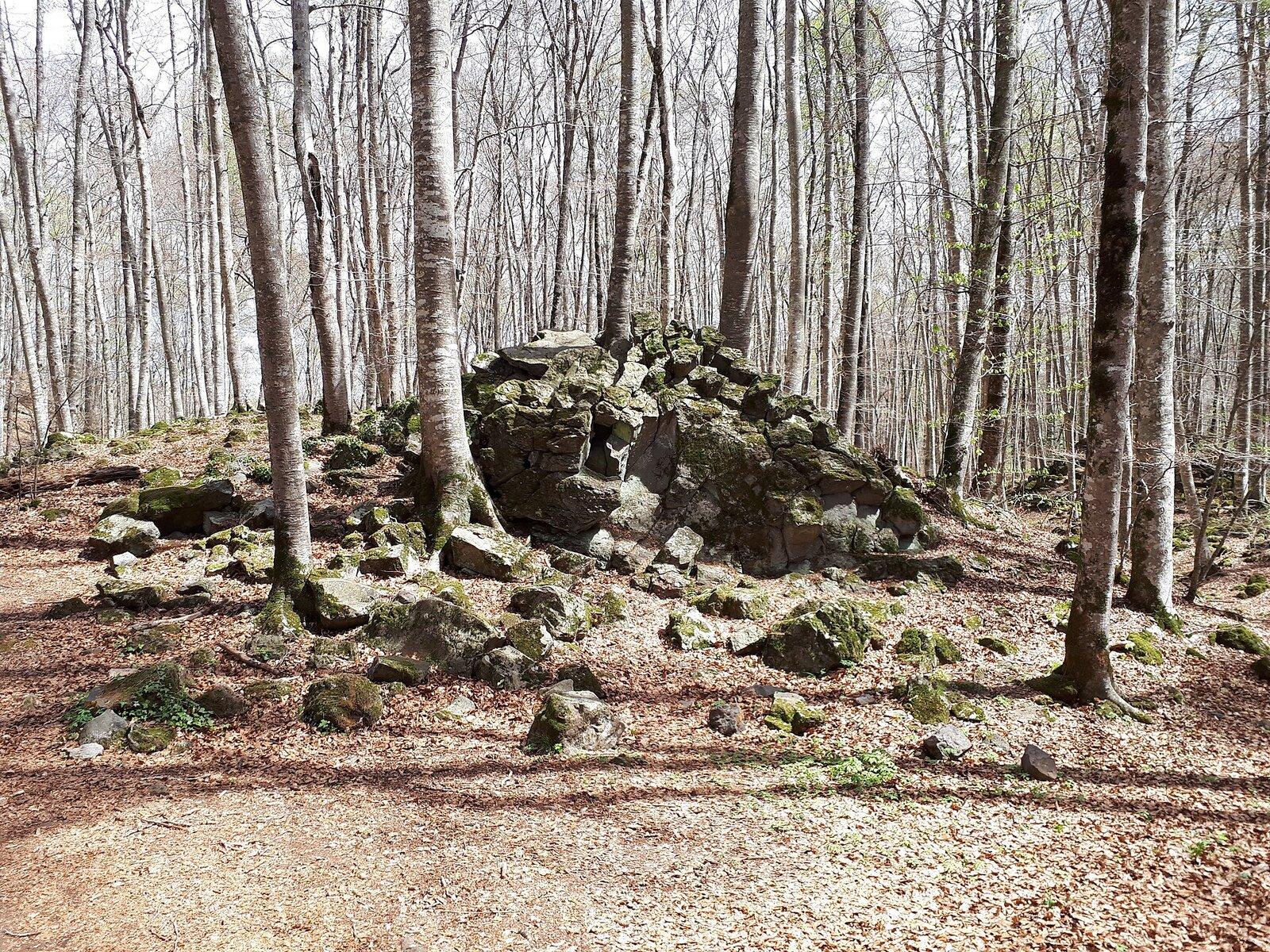
La Fageda d’en Jordà is a beech forest growing on an ancient lava flow. The relatively low elevation of the forest makes it unusual, while its flat and shaded paths attract walkers throughout the year.
Spring brings fresh green leaves, summer provides welcome shade, and autumn transforms the forest with warm colors. Winter reveals a quieter and more open landscape.
The forest can become busy during autumn weekends. Arrive early or visit on a weekday if you want a more peaceful experience.
See the Croscat Volcano
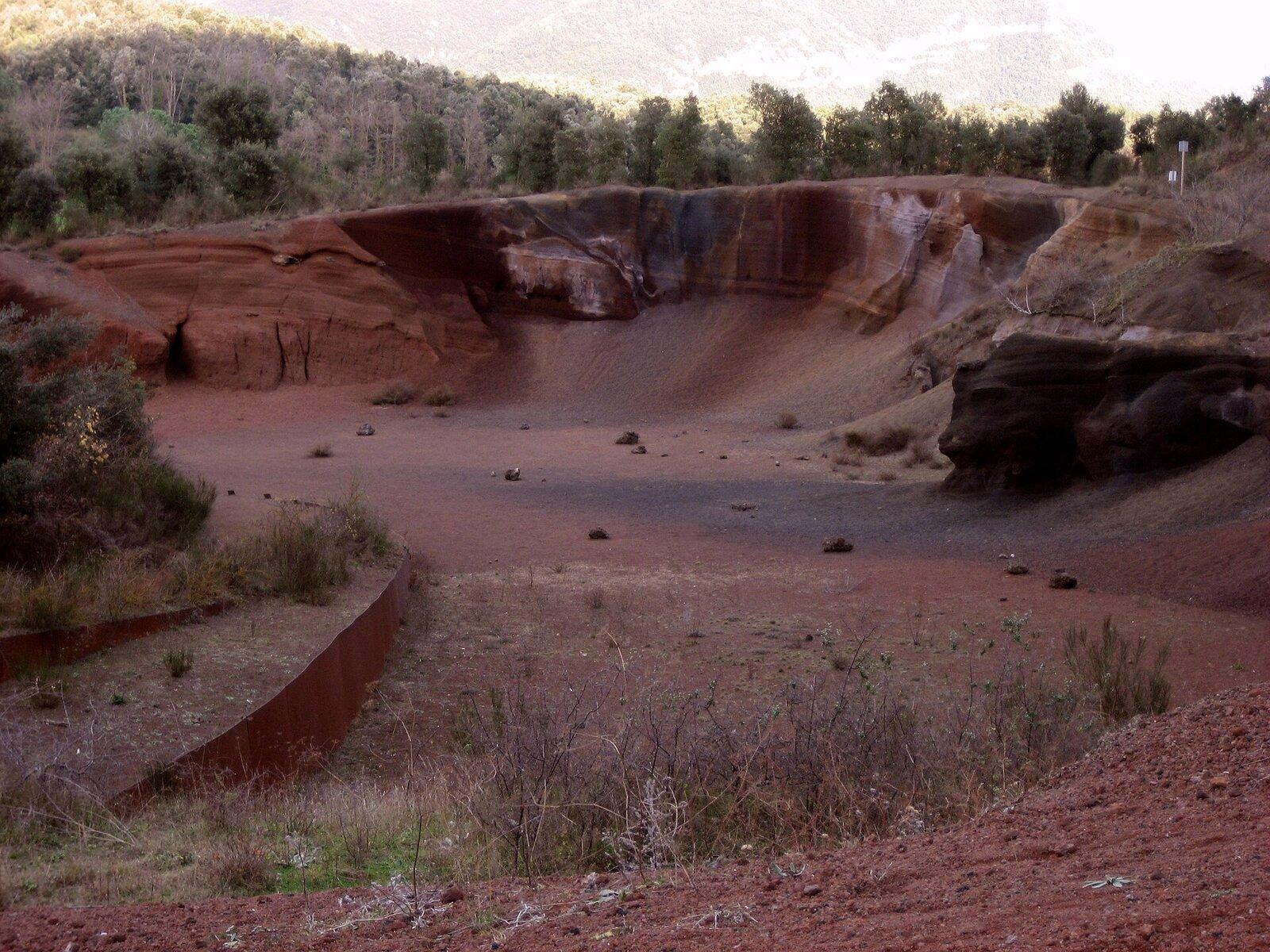
Croscat is one of the youngest volcanic formations in the area. Former extraction activity exposed part of its interior, revealing layers of red, black, and brown volcanic material.
The exposed section helps visitors understand the geology hidden beneath the region’s forests and fields.
Access should be made using authorized paths. Climbing directly across protected volcanic surfaces damages the site and may be prohibited.
Visit Santa Pau
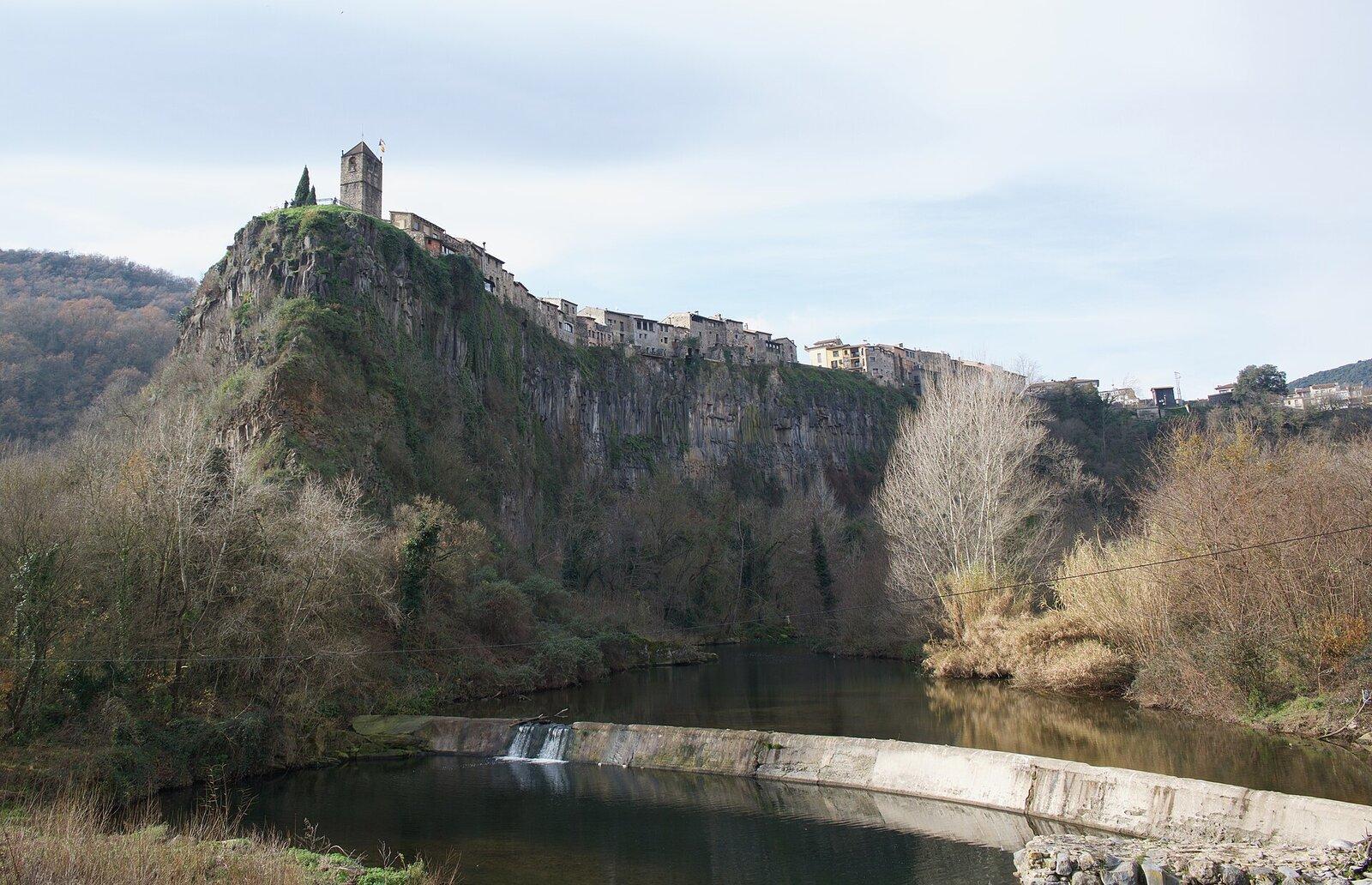
Santa Pau is a medieval village located inside the volcanic zone. Its historic center contains stone houses, covered passages, a central square, and views across the surrounding landscape.
The village is an excellent base for exploring nearby volcanoes and La Fageda d’en Jordà. It is also associated with fesols de Santa Pau, small local beans valued in the region’s cuisine.
Stay for lunch or spend the night if you want to experience the village when it is at its quietest.
Discover Olot
Olot is the principal town of La Garrotxa and the most practical base for travelers using public transportation.
The town contains Modernist architecture, museums, markets, parks, and easy access to volcanic landscapes. Montsacopa volcano rises directly beside the urban area and can be reached on foot.
From the crater area, viewpoints look across Olot toward the surrounding mountains and volcanic terrain.
Try the Local Cuisine
The cuisine of La Garrotxa makes use of beans, buckwheat, mushrooms, vegetables, sausages, meat, and locally produced dairy products.
Many restaurants serve a style of cooking known as volcanic cuisine, emphasizing ingredients grown or produced in the region.
Look for fesols de Santa Pau, farro soup, local botifarra, seasonal mushrooms, and dishes made with buckwheat. Menus change during the year, particularly as autumn ingredients become available.
Visit the La Fageda Project
La Fageda is both a food producer and a social project based on the inclusion of people in vulnerable circumstances through meaningful employment.
Its farm and production facilities are located in the natural park near Santa Pau. Organized visits explain the project and introduce visitors to the farm and manufacturing process.
Reservations are required for visits, and vehicle access may be controlled. Follow the arrival instructions provided with your booking.
How Long Should You Stay?
Two days provide enough time for a first visit:
- Day 1: Olot, Montsacopa, and the town center
- Day 2: La Fageda d’en Jordà, Croscat, and Santa Pau
With three or four days, you can complete longer walks, explore smaller villages, visit Besalú, or continue toward the Pyrenees.
When to Visit La Garrotxa
Autumn is particularly popular because of the colors in La Fageda d’en Jordà and the region’s seasonal cuisine.
Spring is greener and often quieter. Summer can be warm, although the forest provides shade. Winter offers peaceful landscapes but shorter daylight hours and a greater chance of cold or wet conditions.
Weather can change quickly in inland and mountain areas, so bring layers and suitable footwear.
Getting Around
A car provides the greatest flexibility, but parking and access may be regulated around the natural park’s busiest locations.
Olot can be reached by bus, and local transportation may connect some visitor areas. However, travelers relying entirely on public transportation should plan routes and schedules carefully.
Cycling and walking are excellent ways to experience the landscape once you arrive.
La Garrotxa is ideal for travelers who want to see a greener, quieter, and less familiar side of Catalonia. Its volcanoes may be silent, but they have shaped almost everything around them—from the forests and farms to the villages and food.
Are you in the know?
Don’t miss our latest Catalonia stories, routes, and practical travel tips.