Rural
La Bisbal, Monells and Madremanya: A Working Empordà Weekend
Anchor an Empordà weekend in La Bisbal’s ceramics trade, then visit Monells and Madremanya without treating lived-in villages as scenery.
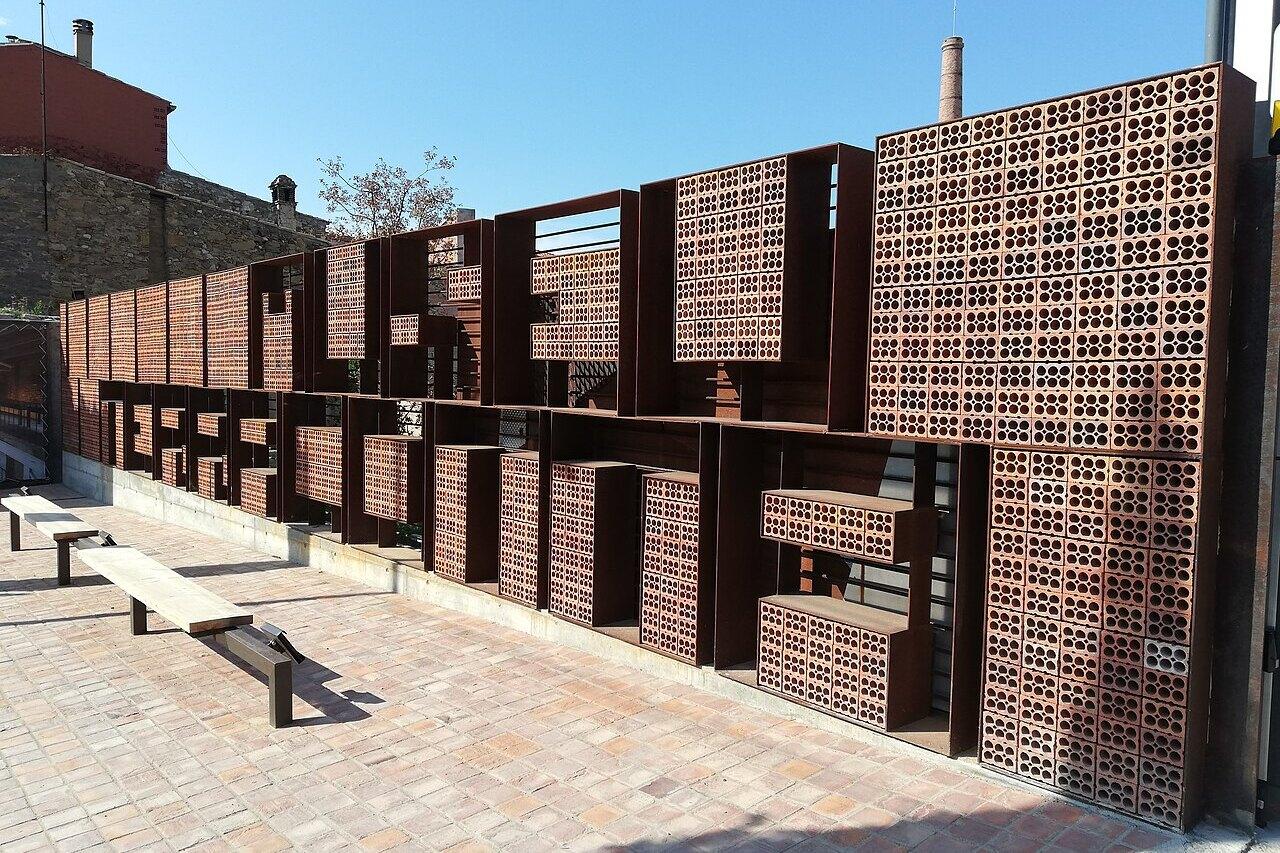
La Bisbal d’Empordà, Monells and Madremanya are often compressed into a drive past stone façades. That misses the useful contrast. La Bisbal is a comarca capital where clay became industry, training, retail and contemporary practice. Monells is a very small settlement whose celebrated square still sits within ordinary local life. Madremanya occupies a farmed hill at the edge of the Gavarres, with steep lanes organized around a fortified church.
Let the working town lead. Base in or near La Bisbal, give Saturday morning to the Terracotta Museu and ceramics shops, and use Sunday for the short Monells–Madremanya circuit. The sequence protects museum hours and shopping time while keeping the villages out of the hottest or busiest part of the day.
A weekend built around clay, not a photo checklist
| Time | Plan | What to settle first |
|---|---|---|
| Friday evening | Arrive in La Bisbal; walk the Daró and centre | Dinner hours and hotel parking |
| Saturday morning | Terracotta Museu for 90 minutes–2 hours | Current opening, exhibition and guided-visit availability |
| Saturday midday | Carrer de l’Aigüeta and a ceramics purchase | Shop hours and how the piece will be packed |
| Saturday afternoon | Castell Palau exterior/centre, rest or a booked workshop | Do not assume an active studio accepts drop-ins |
| Sunday morning | Monells, then Madremanya | Edge parking and any event or road restriction |
| Sunday lunch | Reserved table near the route | Kitchen closing time, not village proximity alone |
The road circuit from La Bisbal through Monells and Madremanya and back is compact—roughly 35–45 kilometres depending on the return—but rural junctions, cyclists and tractors make stopwatch driving unhelpful. A car is practical for the full combination. With no car, keep the weekend in La Bisbal and choose one prearranged taxi or guided outing rather than assuming frequent village buses.
Allow €140–€290 per person sharing for two nights, meals, museum admission and local driving, before ceramics purchases. That is a planning range, not a quoted package. Rooms, workshop sessions and destination restaurants can lift it substantially.
Terracotta Museu makes the Saturday shops legible
Begin at the Terracotta Museu, housed in the former Terracotta ceramics factory. The surviving kilns, chimneys and production spaces prevent the collection from becoming a shelf of attractive pots detached from labor. Follow the sequence from local clay and preparation through forming, decoration, firing, architectural ceramics and current makers.
The official museum program changes with temporary exhibitions, guided visits and workshops. Check the exact date and reserve any activity that matters; a general museum ticket does not promise entry to an active workshop. Ninety minutes is a sensible minimum for the permanent display, while a guided or maker-focused program can occupy half a day.
Ask three questions while looking: was the object made for household, construction or display; was the process artisanal or industrial; and which part of the factory made that scale possible? Those questions make the later shop windows easier to read. “Handmade,” “local” and “traditional” describe different things and should not be treated as synonyms.
Continue along Carrer de l’Aigüeta, where the town’s ceramics shopping guide says many specialist shops are concentrated. Look for the registered Ceràmica de la Bisbal mark when local production is the purpose of the purchase, and ask who made the piece, where it was fired, whether it is food-safe and whether it tolerates a dishwasher, oven or thermal shock.
Pay for expertise rather than bargaining as if every workshop were a souvenir warehouse. If a maker is throwing, glazing, loading a kiln or serving another customer, wait. Photography inside a workshop requires explicit permission. A shop open to the public is not permission to enter the working area behind it.
La Bisbal’s ordinary hours belong in the plan
If the weekend begins on Friday, the morning weekly market adds produce, household shopping and residents’ routines to the ceramics story. On other days, the central streets, food shops and cafés still matter. Do not leave the car blocking delivery space while pursuing the closest possible museum or shop entrance.
The Castell Palau and old centre can fill the post-lunch hour, but only if the current access suits the day. A closed monument does not require replacement by another village. Walk the public town, follow the Daró for a short stretch, or return to the museum’s temporary exhibition.
Compare stays around La Bisbal and the inland Empordà, then confirm parking and dinner. A rural house near Madremanya can be peaceful, but it shifts every errand and museum visit back into the car. La Bisbal is the stronger base when ceramics are the reason for the trip; a village stay is stronger when quiet evenings are the priority.
Monells: cross the Rissec before judging the village
On Sunday, use the signed visitor parking outside Monells and walk in. Do not follow navigation through a narrow access merely because it appears closer to Plaça Jaume I. The Baix Empordà’s responsible-tourism guidance explicitly asks visitors to use designated parking and respect the people who live in these small centres.
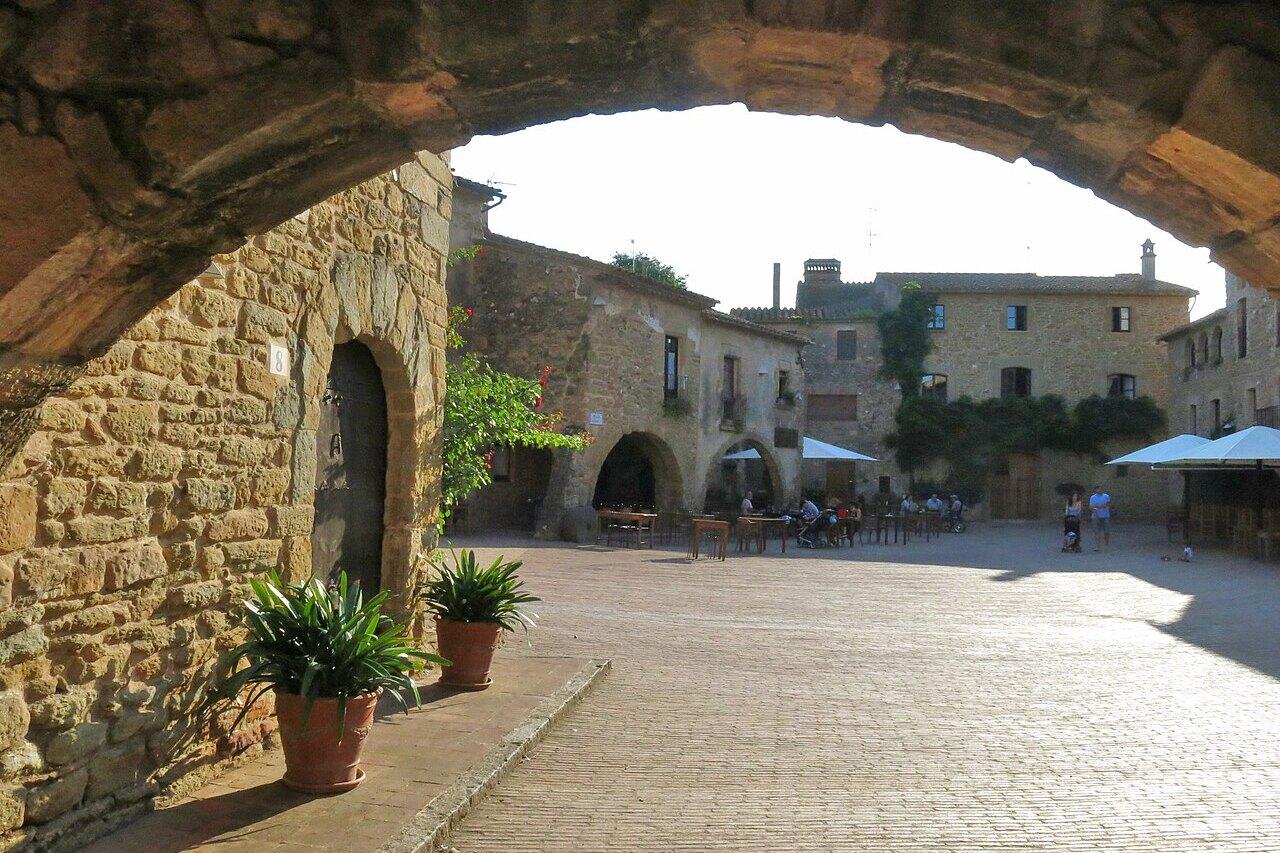
The official Monells description explains that the Rissec divides the settlement into the Castell and Riera neighbourhoods. Start with the arcaded Plaça Jaume I, then leave it: pass the surviving wall fabric, cross toward the Riera side and find Sant Genís. That short sequence restores the village’s geography after the famous square has dominated the first impression.
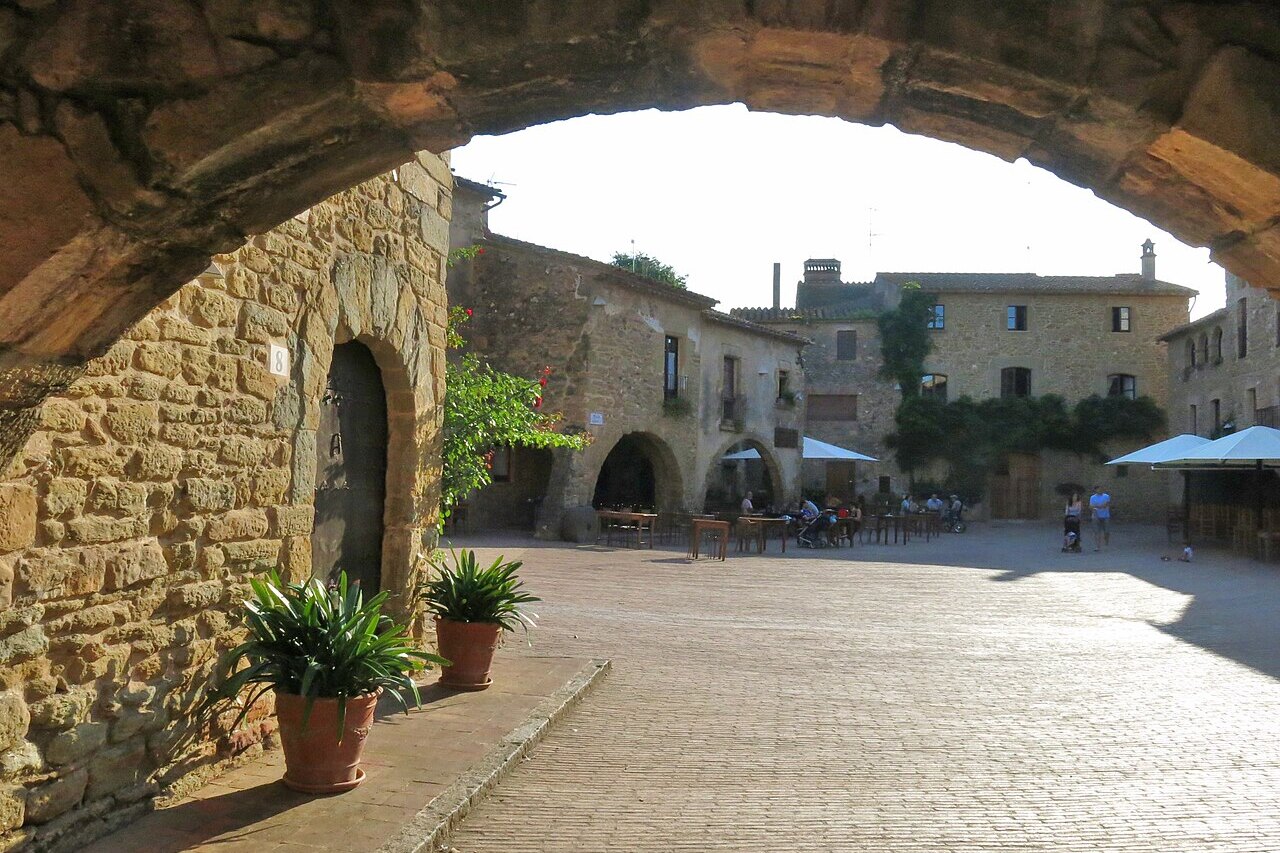
Keep voices low beneath the arcades, do not use doorsteps as seats and give vehicles room to reach homes and businesses. A café table is a good way to spend time when one is operating, but it does not turn the entire square into a set. If an event fills the core, accept the crowd or leave for Madremanya rather than parking on verges and entrances.
Madremanya is read from the fields upward
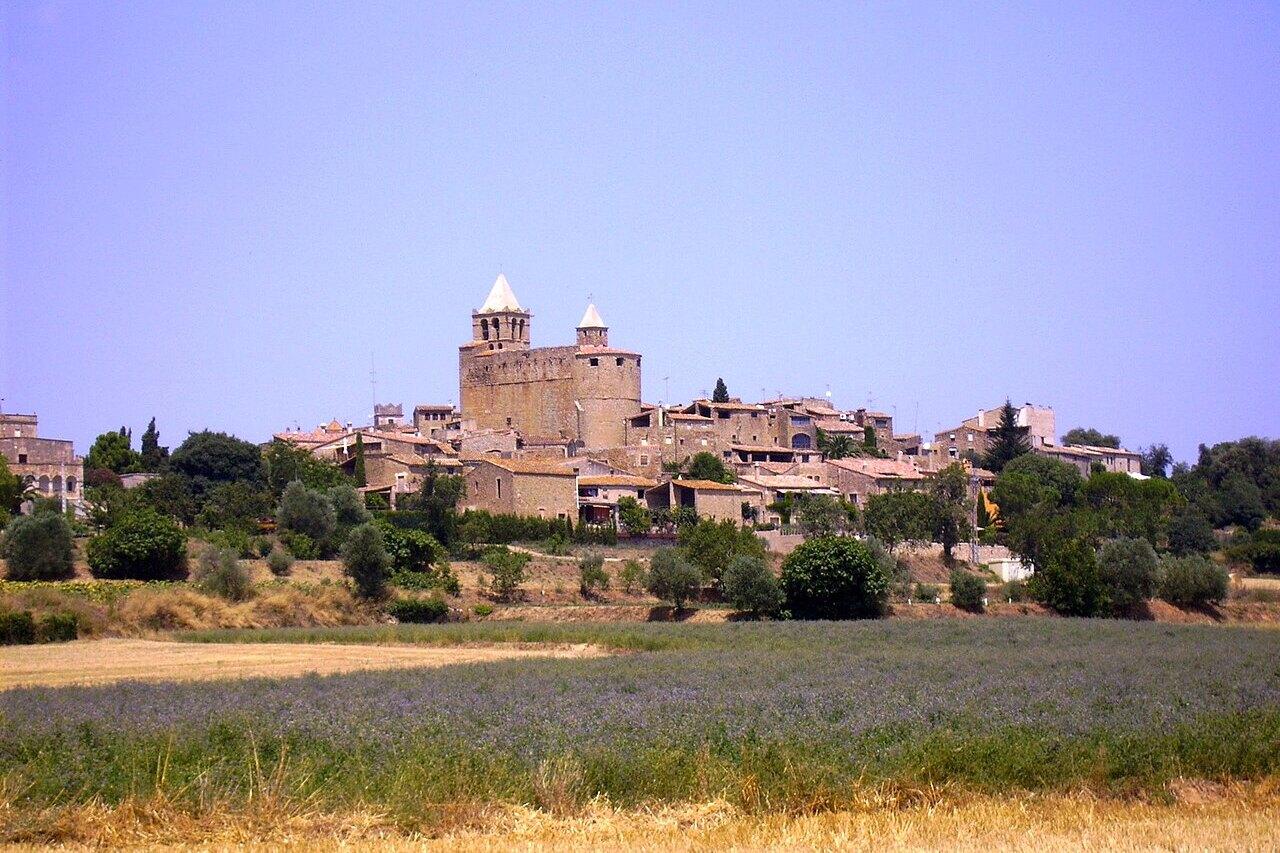
From Monells, follow the signed route toward Madremanya; the GIV-6701 connects this side of the mosaic of fields and wooded Gavarres margins. Park at the designated area by the approach rather than climbing into the old enclosure. The municipal old-town walk begins at the parking opposite Travessera de Sant Esteve and gives a clear pedestrian sequence through the west portal, narrow lanes, the Sagrera gateway and the church steps.
The slopes and stairs are part of the place. Travelers with limited mobility should study that official sequence and ask the council about the gentlest available approach before arrival. Cobbles can be slippery in rain, and shade can keep them damp after the sky clears.
Sant Esteve is more than a skyline marker. The official church account describes its late-Romanesque structure, later additions and semi-fortified role as protection for an agricultural community. It also indicates that regular worship is limited to special occasions. Expect to understand much of the building from outside unless access has been confirmed.
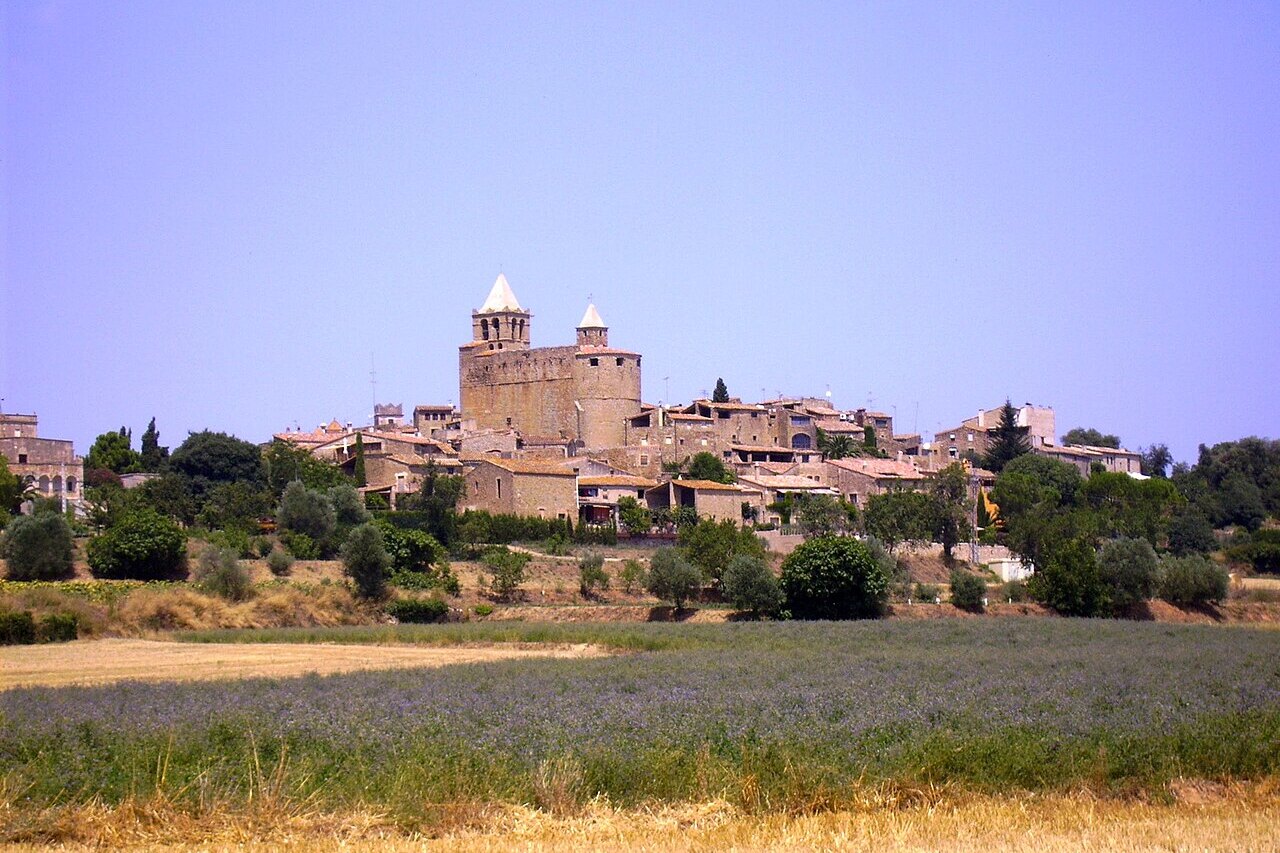
The fields below are working land. Stay on public roads and paths, close no gates you did not open, open none without permission, and never step into a crop for a wider photograph. Farm tracks that look inviting on a map may end at a home, machinery yard or private field.
What to carry home—and what to leave alone
For ceramics, bring measurements of the shelf or table where the object will live. Ask the shop to wrap handles, rims and lids separately, and place the package where it cannot slide in the car. For flights, verify cabin and checked-baggage limits; a dense stoneware bowl can consume more weight than expected.
For food, use shops and producers that actively sell to the public. A roadside orchard, stacked crate or farmhouse sign is not an invitation to enter. If a small outlet is closed, return during its stated hours or buy in La Bisbal rather than knocking on a private door at lunchtime.
Heavy rain is the simplest reason to abandon the Sunday circuit. Stay at the Terracotta Museu if open, revisit La Bisbal’s shops and take a long lunch. If only Monells parking is full, continue to Madremanya and walk one centre well. The weekend succeeds when a kiln, a shop counter, a public square and a farmed hillside remain connected to the people who use them—not when every stone backdrop is acquired before departure.
Related guides
- Les Garrigues During Olive Harvest: Mill and Village Weekend
Build a Les Garrigues harvest weekend around one confirmed mill visit, an Arbequina tasting and time in La Granadella or Les Borges Blanques.
- Cerdanya Village Loop: Llívia, Ger and Bellver by Car
Drive a measured Cerdanya loop through Llívia, Ger and Bellver, ordered around the museum, lunch, parking and winter road conditions.
- Horta de Sant Joan: Village Streets and a Countryside Day
Spend a village-first day in Horta de Sant Joan with the Centre Picasso, a local lunch and an optional visit to the Sant Salvador surroundings.
Are you in the know?
Receive new articles, local updates, and occasional offers from selected partners. We never share your email address. Unsubscribe at any time.
By subscribing you agree to our privacy policy.